
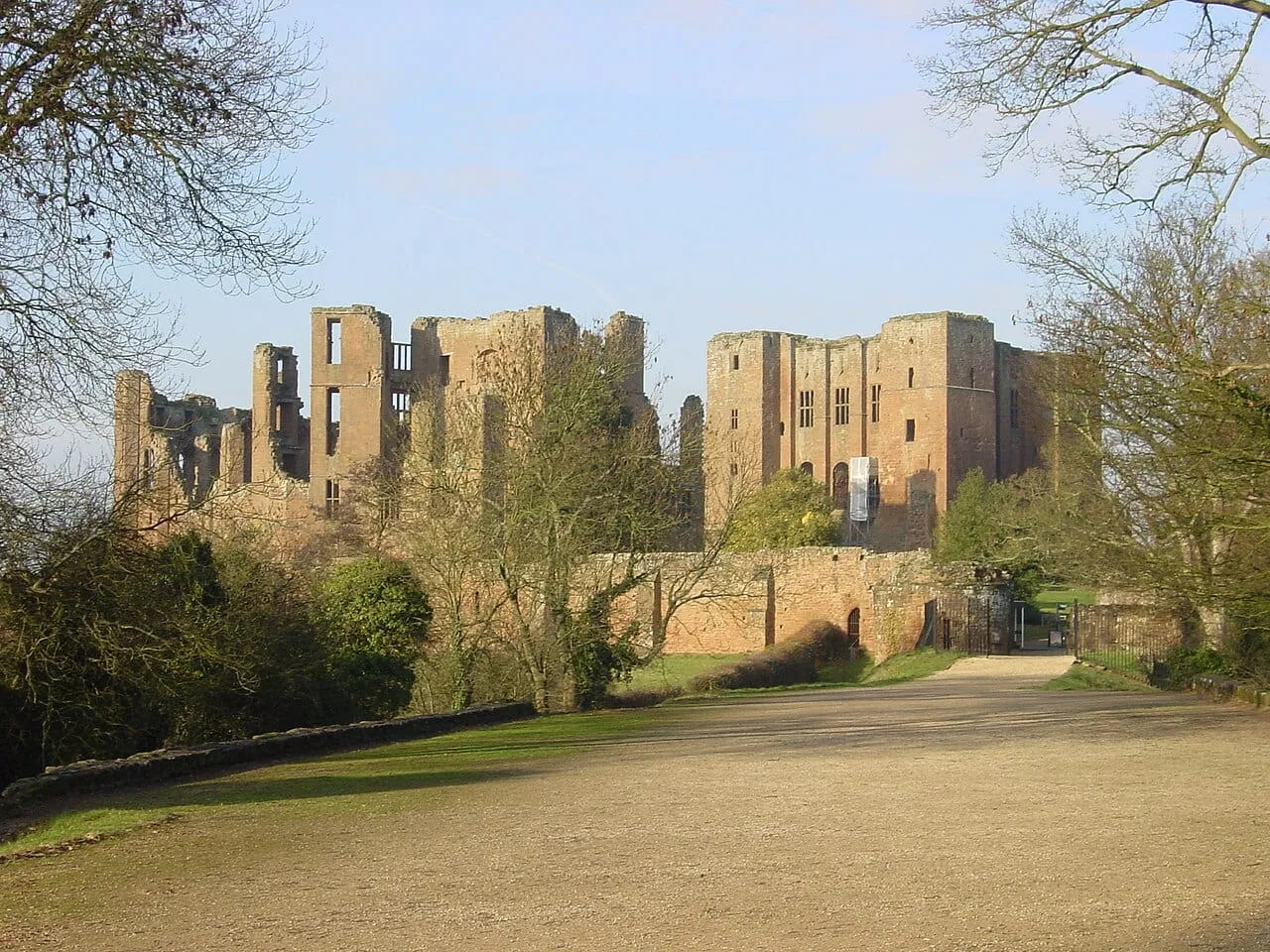
In Warwickshire, the mighty red-sandstone ruins of Kenilworth still dominate the countryside. A medieval fortress turned into a pleasure palace by Elizabeth I's favourite, Robert Dudley, the castle was, in 1575, the theatre of the most sumptuous festivities of the reign — one man's last attempt to marry his queen.
From fortress to pleasure palace
Kenilworth had been since the Middle Ages a stronghold of the first order, with a great Norman keep and a vast artificial lake (the 'Mere') that made it all but impregnable — in 1266 it had withstood one of the longest sieges in English history, and John of Gaunt, in the fourteenth century, had raised there a magnificent great hall. In 1563 Elizabeth I gave it to her favourite, Robert Dudley, Earl of Leicester. Dudley transformed the fortress into a pleasure house worthy of receiving the sovereign: he raised a new building with immense windows ('Leicester's Building'), fitted out luxurious apartments, built a gatehouse tower and, above all, laid out a dream garden. The warlike castle became a setting for love and power.
1575: nineteen days of enchantment
In July 1575 Dudley received Elizabeth I at Kenilworth for a stay of nineteen days that passed into legend: fireworks over the lake, water pageants, a 'Lady of the Lake' rising from the waters to address the queen, hunts, banquets, music, plays and poetry composed for the occasion by men of letters such as George Gascoigne. It was, it is said, Dudley's last great attempt to win the queen's hand. She left charmed — but still resolved not to marry. The Elizabethan garden, reconstructed today by English Heritage from the minute description a witness left of it, with its marble fountain, its parterres, its trellises and its obelisk, gives an idea of that fleeting paradise. Legend has it that a local child, William Shakespeare, then eleven, may have watched these wonders from afar.
What to see
- The red-sandstone ruins: Norman keep, John of Gaunt's great hall and 'Leicester's Building' with its great windows.
- The reconstructed Elizabethan garden (marble fountain, parterres, obelisk, aviary).
- Leicester's gatehouse tower, still standing.
- The site of the old lake (the 'Mere') and the views over the countryside.
Seeing it differently
Stand where the 'Mere' once spread: the whole theatre of 1575 was played out on water, now vanished, and it was from the causeway that the queen saw her 'Lady of the Lake' appear. Look, in 'Leicester's Building', at the gaping windows, too large for a fortress: they tell of an age tipping over, from war towards pleasure. And in the reconstructed garden, imagine the scents, the birds of the aviary, the marble of the fountain streaming — a setting conceived entirely to seduce a single spectator. Kenilworth is a ruin that tells, better than any intact palace, of a passion that came to nothing.
Did you know?
The festivities of 1575 were so famous that a witness, Robert Langham, left a long, enthusiastic description of them. It has long been loved to imagine that the young Shakespeare, born at nearby Stratford, attended — and that the memory of the 'Lady of the Lake' rising from the waters later inspired some of his enchantments, as in A Midsummer Night's Dream. Nothing proves it, but the legend prettily links the greatest English poet to the most sumptuous festival of his childhood.
Notes
Kenilworth Castle lies at Kenilworth, in Warwickshire, and is today in the care of English Heritage, with its reconstructed Elizabethan garden.
Quiz
- Which favourite of Elizabeth I turned Kenilworth into a pleasure palace?
- Robert Dudley, Earl of Leicester
- William Cecil
- Francis Drake
- How many days did the 1575 festivities for the queen last?
- Nineteen days
- Three days
- A year
- What can be seen today, reconstructed, at Kenilworth?
- An Elizabethan garden
- A Roman theatre
- A Gothic cathedral